AI (Artificial Intelligence) Regulation: Domestic and International Latest Legal Trends_Law firm Veat Academy On-site Sketch
Article posted in 2025-04-08 16:29:46 | VEAT
Technology advances, and the law follows. Artificial intelligence (AI) technology is rapidly changing our daily lives and industries, and as a result, countries around the world are successively working on legal arrangements to keep pace. Now, the law is not merely a means of control, but is performing the role of a ‘design tool’ that presents direction for technology to function safely and sustainably within society.
Amidst this flow of change, Law firm Veat continuously contemplates issues arising at the intersection of the technology industry and the law, and through the ‘Veat Academy’, is systematically studying the latest legal trends and regulatory issues and reflecting them in practical application..
VEAT ACADEMY: ‘AI (Artificial Intelligence) Regulation, Global Trends and Implications’
This Veat Academy centered on ‘AI (Artificial Intelligence) Regulation’, and also examined the AI legislation and policy trends of major countries. We explored the reasons why AI has become a central regulatory issue, outlined the international discussion flow surrounding the new legal challenges brought about by AI technology, and surveyed the international discussion flow surrounding the new legal challenges brought about by AI technology. Given that AI is evolving into a ‘decision-making tool’ influencing social structures and human lives, we were able to build consensus on the need for regulation and how legislative discussions are formed.
Furthermore, we focused on understanding the current global regulatory landscape by comparing major documents that function as international standards, such as the EU’s AI Act and the OECD’s AI policy recommendations, examining the differences in regulatory philosophy, design methods, and levels. In addition, we juxtaposed the legislation and policy directions of major countries such as the EU, the United States, and China, and also viewed the differences in their perspectives on AI and regulatory approaches. The discussion did not stop at a simple comparison, but also analyzed the flow of regulatory design in depth, focusing on core elements that make up the actual regulation, such as technical classification criteria, regulatory scope, and application methods.
Within this international trend, discussions were also actively held on what kind of institutional response Korea should take. Amidst increasingly intense global regulatory competition, practical perspectives were shared on the strategic challenges and legislative directions that the domestic industry and policy authorities should consider. This Veat Academy reaffirmed the need to not only understand institutional aspects but also to anticipate actual legal and practical challenges that companies will face and jointly explore response strategies.
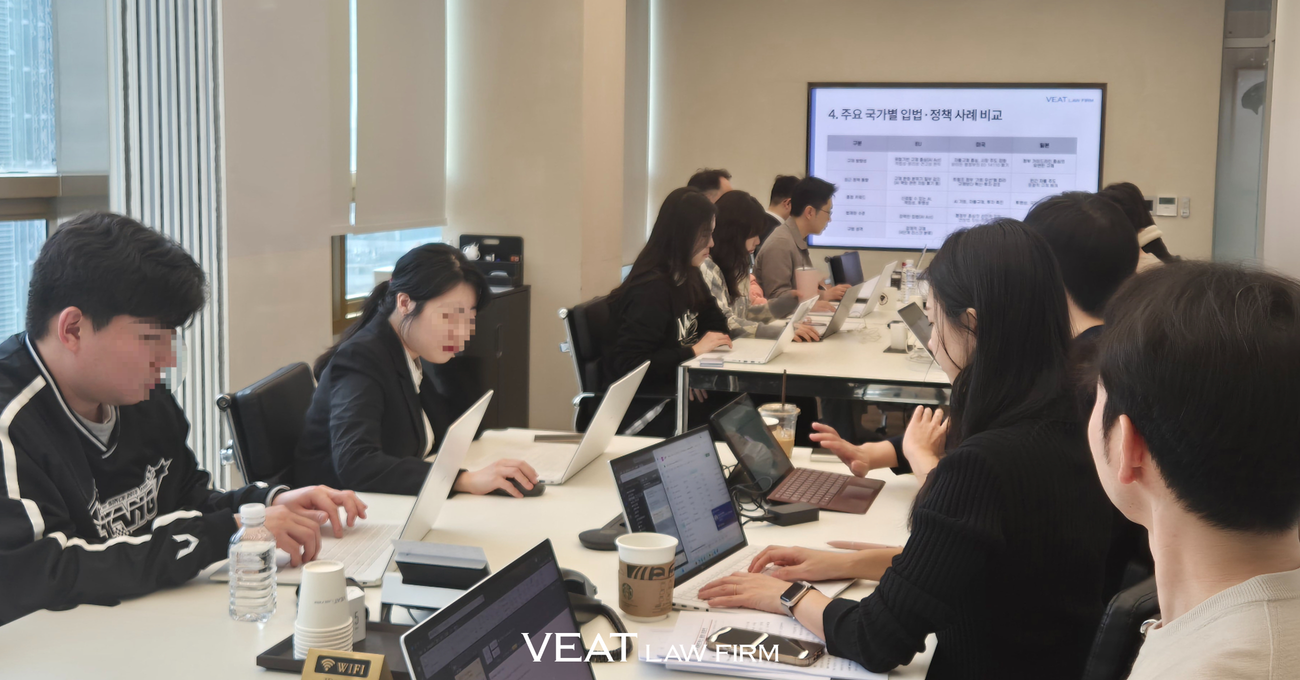
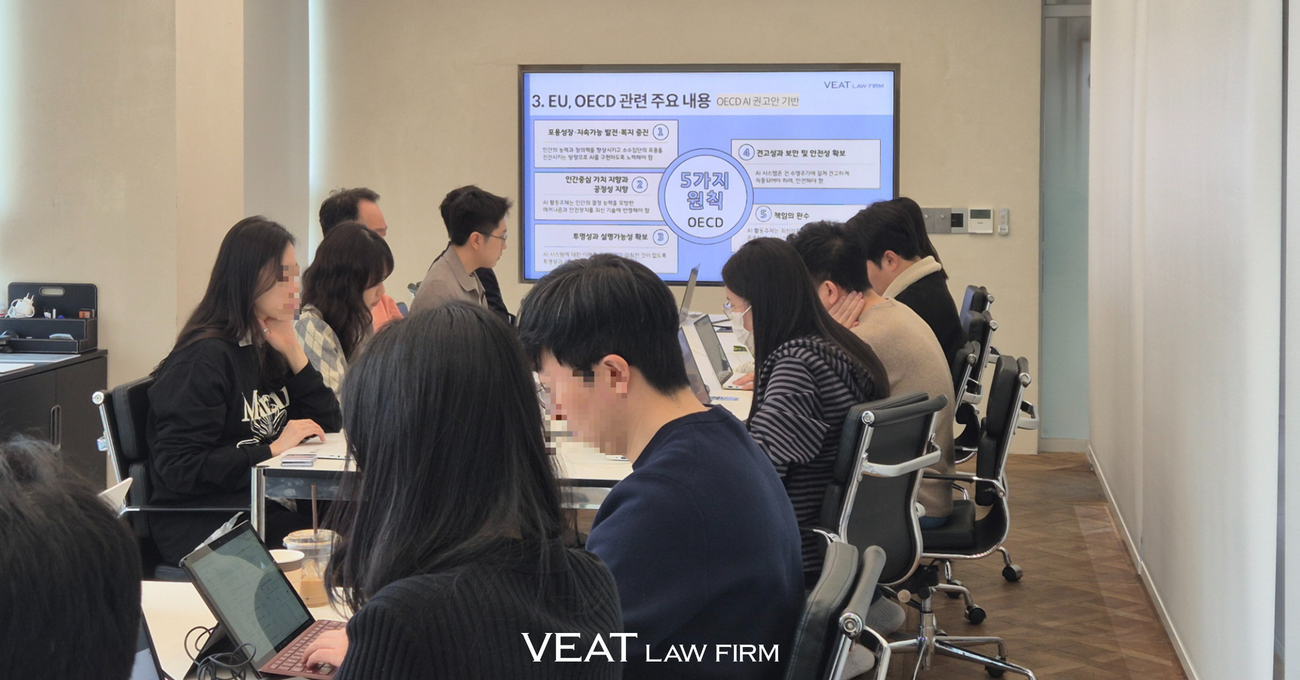
Law firm Veat, leading global and domestic AI regulation responses
Law firm Veat has continuously provided specialized legal services for industries centered on AI technology. However, this expertise is not simply explained by past consulting experience. Veat seeks to provide practical advice to companies at the intersection of technology and regulation through continuous learning and reality-based contemplation.
The Veat Academy is an internal program symbolizing this effort, where members regularly study the latest legal systems and consider how to apply them in practice. Through this constant learning and contemplation, Veat is evolving into a rare and specialized firm capable of performing both proactive analysis of global AI regulatory changes and precise responses to domestic institutional changes. Moving forward, we will continue to provide practical solutions based on internal capabilities, and strive to grow together as a trusted partner.
Thank you.
Law firm Veat